Monday, 30 April 2012

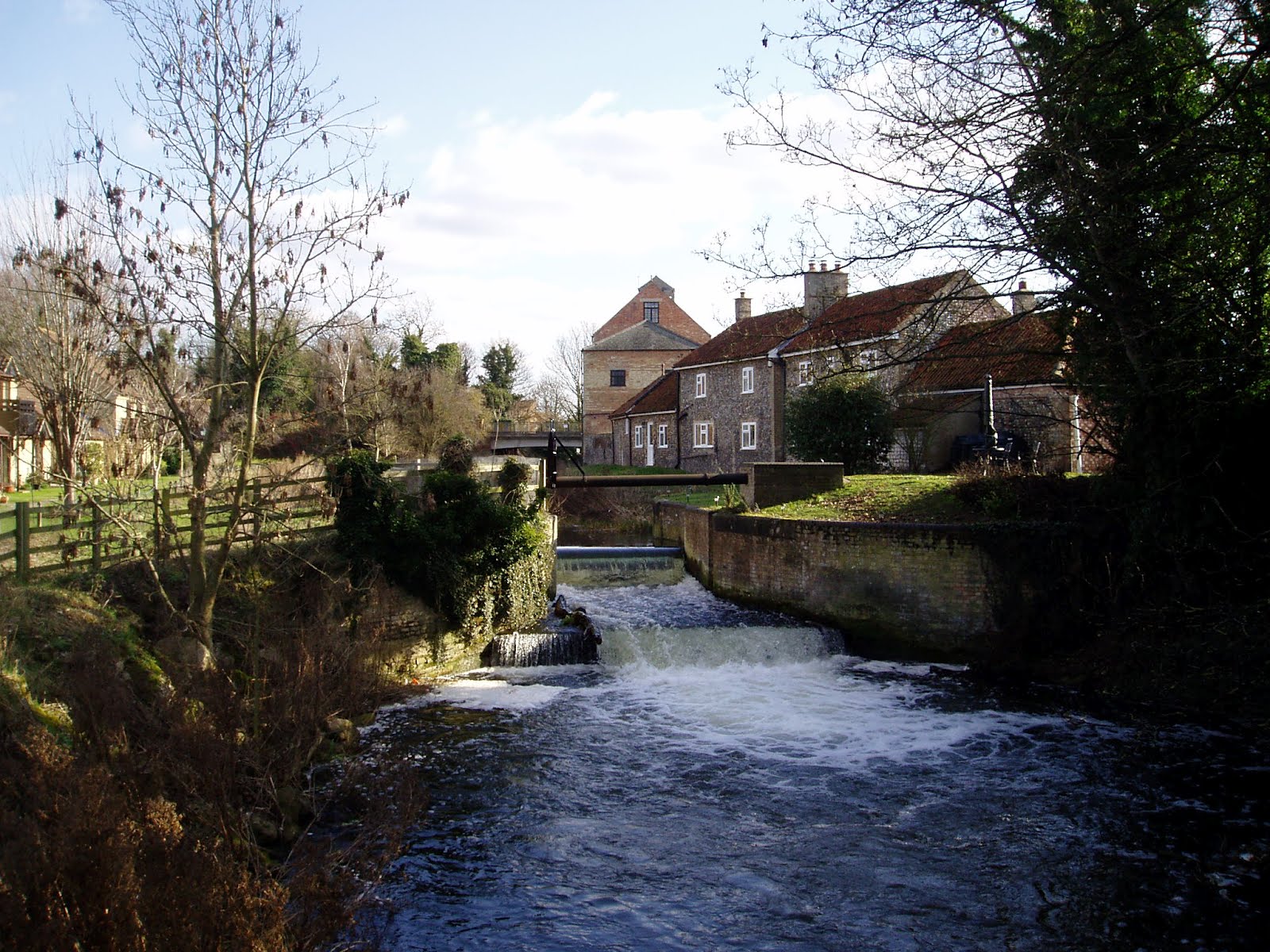
The Ouse in Spate

End of April and we're planning a trip at the end of the week. But what about the weather? Yesterday was the rainest day I can remember in Cambridge. One of those days where you look out of the window and fall back into bed because it's too grim to contemplate...
But wife and friends were running a 10k run along the Cam in the morning so I valiantly set forth to support them, which involved standing in the rain for an hour and a bit, protecting my camera from the downpour and snapping away when they hove into view. They all did really well (though the organisers seem to have lost Jenny's time through some electronic chip failure) and as we stomped off into the warmth of a Chesterton living room the brave rowers continue to stroke back and forth up the Cam, wet through, but oblivious.
But while yesterday was a day for hunkering down and avoiding the outdoors, today dawns warm and dry, so I was in optimistic spirits when I set off for Godmanchester - only to find the river in full spate, the lock and sluices full to the brim of raging water, the recreation ground and much of Port Holme flooded.
I'm glad to say there were no boats out except those in secure moorings, as the speed of water would be easily enough to cause serious problems. It was surely going faster than Patience could go at top speed, and assuming it's the same at Earith, cruisers could probably not fit under the bridge nor even see the channel below the flooded fields.
Here's a pic I took a couple of years ago, last time the Ouse burst its banks at Godmanchester. Not quite so bad today, but not a day for taking Patience out. This scene is normally a lush green lawn looking out onto a gentle river with a grassy recreation ground beyond!
However amongst the rushing through the sluices and the occasional tree trunk charging past I did see a ten minute battle between a gannet and an eel. The gannet had the eel firmly in its beak but couldn't easily get it down its throat. The eel put up a fierce fight, even after it had eventually disappeared down the bird's gullet, and for some time afterwards the gannet was twisted into spasms while the eel continue to try to escape from the stomach. A rare sight in warm sunshine, made possible by the great downpour of the last week.
When will the river slow down to let Patience out? The friendly chaps from the EA couldn't tell me, but they were wearing conspicuous life jackets .... This has officially been the rainiest April since records began over 100 years ago.

Wednesday, 25 April 2012

Holidays Pic

I dreamed of a holiday on Patience, far away from the rain of the English spring ...

It's a fine mooring but even though it's raining heavily here in the Fens, the waterfall surprised me ....

Sunday, 25 March 2012

AC/DC


While preparing Patience for the summer boating season, we noticed that the red warning light on the control panel was 'on' when the ignition switch was off, and vice versa. One of the potential causes of this is a failed diode in the alternator, allowing battery voltage from the battery terminal to feed back through the diode to the field coil terminal and hence to earth via the warning light and the ignition switch. Some investigation with a multimeter confirmed that this was almost certainly the problem, rather than the alternative possibility of a faulty ignition switch. A replacement alternator was bought from Unipart at a cost of £57.23 (£24 of which is refundable when the old one is returned). The first photo shows the old one on the left and the new one on the right.


The only challenge then was to transfer the pulley and fan assembly from the old alternator, as these weren't supplied with the new one. The only way of undoing the 7/8 in AF shaft nut was to use a pneumatic impact wrench, which fortunately a friend just happened to have in his very well equipped garage. With the fan and pulley transferred to the new alternator, it only remained to instal it on Patience, adjust the belt tension and check its operation. With some relief, we discovered that this had cured the problem and the new alternator seems to be working fine and charging the battery bank. The second photo shows the new alternator in place on Patience (top right).


It's just as well that we spotted the problem when we did, as the failed diode would have discharged the batteries when mooored up overnight with the main power switch on. It shows the importance of keeping an eye on the instruments and investigating anything unusual as soon as you spot it.


With the sun shining and some spare time, we took the opportunity of cleaning the domestic water system and refilling the freshly painted bow tank with about 650 litres of clean water, ready for the first cruise of the season.

Friday, 23 March 2012

Paint Job

Patience is a reasonably dark green throughout. We find this suitably subdued and unfussy, as becomes dear Patience. Its official term is either dark green, Donegal Green or Racing Green - each slightly different from the other and easily confused. I don't mind which we use, but it must be consistent. The results of mixing instead of matching become apparent (though not obvious) in places where we have patched small areas instead of a whole panel.
While putting off the big effort of repainting we have looked at other boats of course and so, on a short visit to Bristol docks, I was interested to see these two.
Painted as a rural landscape with pale sky

The opposite of camouflage
Let invention and creativity thrive - but on balance Patience will remain dark green!

Thursday, 15 March 2012

Painting in Preparation

Sunniest and warmest day of the year so far, so John and I were drawn to attend to Patience and to paint her less accessible regions.
The water tank was painted with bitumen paint last year and drained over the winter but there are still small rust spots so John donned his submariners' painting gear and leapt in.
Memo: try to do this with another boater in attendance; make sure you're fit enough to clamber in and out of a tight space; beware fumes; wear painting clothes
Meanwhile at the other end I was tending to the gas lockers.  The tight fitting lids seem not tight enough to prevent water seeping in and as the deck is flat not cambered water tends to stay inside the gas lockers - despite drain holes. So it was out with the gas and in with the wire brush. From one locker alone I extracted a pound weight of damp rust: not pleasant and not good for the boat.
However by scrubbing, scratching and mopping - and an important beer break while the lockers dried out - we were able to give the bottoms of the lockers a good coat of Hammerite. Should be all hardened by tomorrow so we can put the gas back in. John also fitted some draught excluder to the underside of the lid to see if that will help exclude the water.
Tools of the trade: battery powered drill and wire brush attachment, hand held wire brush, draught excluder, newspaper and elbow grease.

Memo: check the lockers next winter and apply more Hammerite if necessary!


Thursday, 2 February 2012

Further up the Lark to Mildenhall

In October 2010 we took Patience as far as Jude's Ferry, the head of navigation on the Lark. Today with a couple of walking friends, I explored the two mile stretch of the Lark between Jude's Ferry and Mildenhall on foot as part of a longer circular walk. There is a delightful footpath running along the north bank of the river. Although the Lark beyond the roadbridge at Jude's Ferry looks almost inviting to explore by boat, it wouldn't be wise to venture further with a craft of any size, certainly a narrow boat! The river becomes quite narrow, shallow and winding in places and navigation is further barred by no fewer than two weirs on the way upsteam to Mildenhall and another at Mildenhall Mill (see photo). There is also very little width in which to turn round below the first weir. However, it was a delightful walk on a bright but very cold February morning. We had lunch in the Bell at Mildenhall - a very good value and warming meal!

Friday, 20 January 2012

The Bargee's Pail

Referred to in this month's Waterways World, The Bargee's Pail is a variant on a basic slow cooker, much like a medieval stew pot, with food suitably wrapped cooking slowly in a simmering cauldron.
It is the recipe of the Pail that is interesting.
Rose Prince's article in The Daily Telegraph describes a layer of diced swede in the base of an earthenware pot, followed by slices of pork belly, then a layer of parsnips and one of carrots. Cover the contents in water then add a rolled piece of suet pastry covering the meat and vegetables to keep the heat in. The pot goes into the bucket, covered by a lid, and the whole thing simmers over an outdoor fire.
After an hour and a half, add the potatoes, a large knob of butter, a strip of smoked bacon, garlic and thyme among the vegetables. Finish with a second layer of suet pastry. Everything should be cooked after two and a half hours.

The Bargee's Pail featured in Waterways World is much the same as the description above though it features chopped apple on the top and a bottle of tea to the side!

A response to this article refers to a "fireless cooker" which is an insulated chest containing a hot slab of metal providing enough heat to cook a meal slowly. The "Hangi" or earth oven works in the same way. My wife would set off on her annual Guide camp with a meal of barley rice cooked on our stove and placed in a haybox - an old tea chest insulated with straw - which would be cooked ready for the evening meal once the tents had been put up.
And it's this insulation which is the appealing thing for me. I don't like having the gas on for extended periods. It generates water vapour, or too much heat in the cabin in summer, or both, and is wasteful. A heavily insulated container means you can leave it on deck to literally cook in its own juice.
On the other hand, if you're out on the bank for a few hours and in a position to have an open fire, The Bargee's Pail would be a good choice. You can also cook baked potatoes in the embers or a stew in a Dutch Oven which is ideal for a long slow wood burning fire.
So for me The Bargee's Pail in an insulated container rather than over an open fire is economical, safe - and very tasty!
You might, however, prefer a small pressure cooker - 3 litres capacity, costing £20-30- which would be compact and efficient enough for a narrow boat. Add to that "80 Recipes for Your Pressure Cooker" by Richard Ehrlich. Both can be obtained from Amazon and would provide a quicker alternative to the Bargee's Pail.