Sunday, 25 March 2012

AC/DC


While preparing Patience for the summer boating season, we noticed that the red warning light on the control panel was 'on' when the ignition switch was off, and vice versa. One of the potential causes of this is a failed diode in the alternator, allowing battery voltage from the battery terminal to feed back through the diode to the field coil terminal and hence to earth via the warning light and the ignition switch. Some investigation with a multimeter confirmed that this was almost certainly the problem, rather than the alternative possibility of a faulty ignition switch. A replacement alternator was bought from Unipart at a cost of £57.23 (£24 of which is refundable when the old one is returned). The first photo shows the old one on the left and the new one on the right.


The only challenge then was to transfer the pulley and fan assembly from the old alternator, as these weren't supplied with the new one. The only way of undoing the 7/8 in AF shaft nut was to use a pneumatic impact wrench, which fortunately a friend just happened to have in his very well equipped garage. With the fan and pulley transferred to the new alternator, it only remained to instal it on Patience, adjust the belt tension and check its operation. With some relief, we discovered that this had cured the problem and the new alternator seems to be working fine and charging the battery bank. The second photo shows the new alternator in place on Patience (top right).


It's just as well that we spotted the problem when we did, as the failed diode would have discharged the batteries when mooored up overnight with the main power switch on. It shows the importance of keeping an eye on the instruments and investigating anything unusual as soon as you spot it.


With the sun shining and some spare time, we took the opportunity of cleaning the domestic water system and refilling the freshly painted bow tank with about 650 litres of clean water, ready for the first cruise of the season.

Friday, 23 March 2012

Paint Job

Patience is a reasonably dark green throughout. We find this suitably subdued and unfussy, as becomes dear Patience. Its official term is either dark green, Donegal Green or Racing Green - each slightly different from the other and easily confused. I don't mind which we use, but it must be consistent. The results of mixing instead of matching become apparent (though not obvious) in places where we have patched small areas instead of a whole panel.
While putting off the big effort of repainting we have looked at other boats of course and so, on a short visit to Bristol docks, I was interested to see these two.
Painted as a rural landscape with pale sky

The opposite of camouflage
Let invention and creativity thrive - but on balance Patience will remain dark green!

Thursday, 15 March 2012

Painting in Preparation

Sunniest and warmest day of the year so far, so John and I were drawn to attend to Patience and to paint her less accessible regions.
The water tank was painted with bitumen paint last year and drained over the winter but there are still small rust spots so John donned his submariners' painting gear and leapt in.
Memo: try to do this with another boater in attendance; make sure you're fit enough to clamber in and out of a tight space; beware fumes; wear painting clothes
Meanwhile at the other end I was tending to the gas lockers.  The tight fitting lids seem not tight enough to prevent water seeping in and as the deck is flat not cambered water tends to stay inside the gas lockers - despite drain holes. So it was out with the gas and in with the wire brush. From one locker alone I extracted a pound weight of damp rust: not pleasant and not good for the boat.
However by scrubbing, scratching and mopping - and an important beer break while the lockers dried out - we were able to give the bottoms of the lockers a good coat of Hammerite. Should be all hardened by tomorrow so we can put the gas back in. John also fitted some draught excluder to the underside of the lid to see if that will help exclude the water.
Tools of the trade: battery powered drill and wire brush attachment, hand held wire brush, draught excluder, newspaper and elbow grease.

Memo: check the lockers next winter and apply more Hammerite if necessary!


Thursday, 2 February 2012

Further up the Lark to Mildenhall

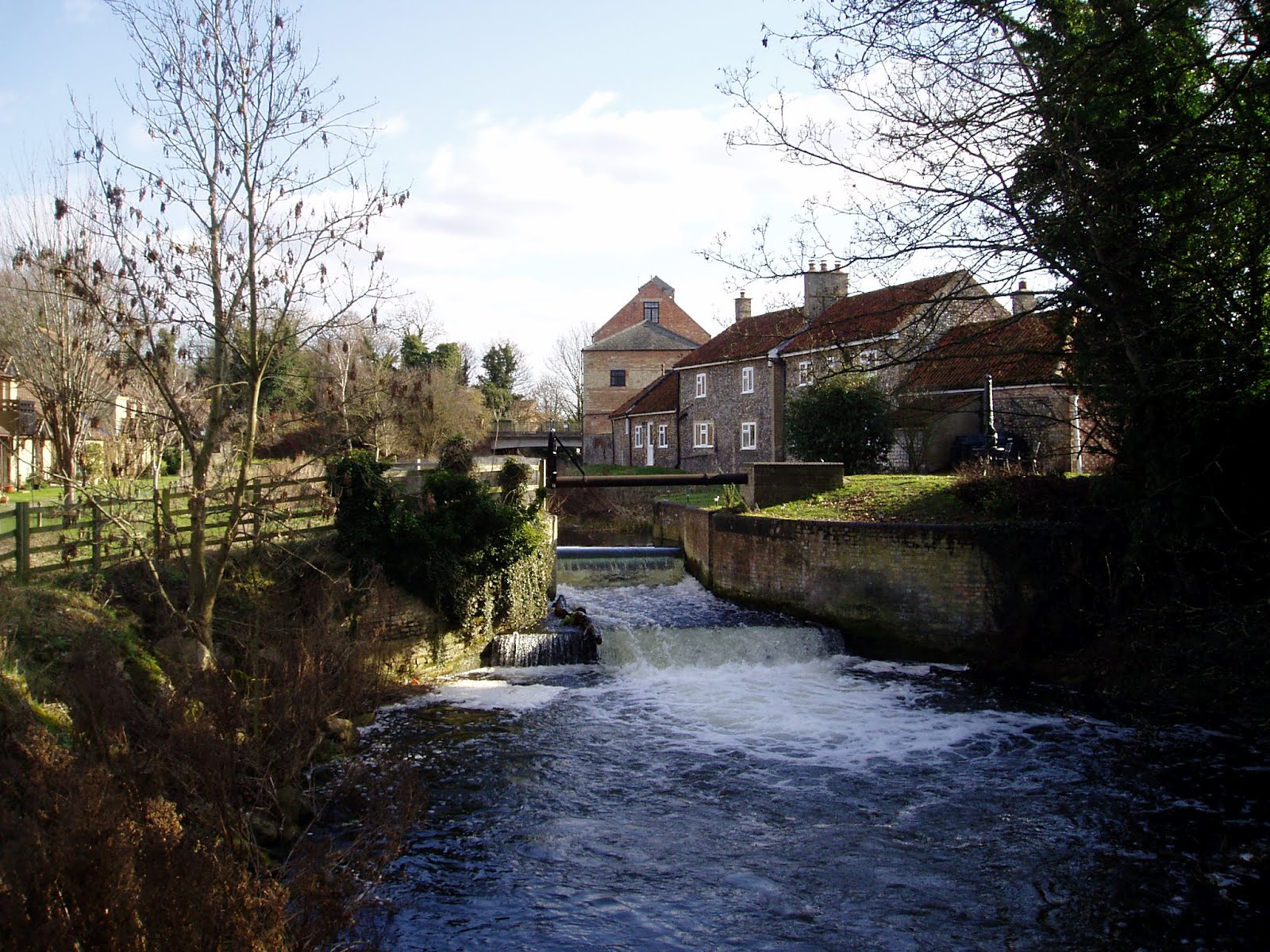
In October 2010 we took Patience as far as Jude's Ferry, the head of navigation on the Lark. Today with a couple of walking friends, I explored the two mile stretch of the Lark between Jude's Ferry and Mildenhall on foot as part of a longer circular walk. There is a delightful footpath running along the north bank of the river. Although the Lark beyond the roadbridge at Jude's Ferry looks almost inviting to explore by boat, it wouldn't be wise to venture further with a craft of any size, certainly a narrow boat! The river becomes quite narrow, shallow and winding in places and navigation is further barred by no fewer than two weirs on the way upsteam to Mildenhall and another at Mildenhall Mill (see photo). There is also very little width in which to turn round below the first weir. However, it was a delightful walk on a bright but very cold February morning. We had lunch in the Bell at Mildenhall - a very good value and warming meal!

Friday, 20 January 2012

The Bargee's Pail

Referred to in this month's Waterways World, The Bargee's Pail is a variant on a basic slow cooker, much like a medieval stew pot, with food suitably wrapped cooking slowly in a simmering cauldron.
It is the recipe of the Pail that is interesting.
Rose Prince's article in The Daily Telegraph describes a layer of diced swede in the base of an earthenware pot, followed by slices of pork belly, then a layer of parsnips and one of carrots. Cover the contents in water then add a rolled piece of suet pastry covering the meat and vegetables to keep the heat in. The pot goes into the bucket, covered by a lid, and the whole thing simmers over an outdoor fire.
After an hour and a half, add the potatoes, a large knob of butter, a strip of smoked bacon, garlic and thyme among the vegetables. Finish with a second layer of suet pastry. Everything should be cooked after two and a half hours.

The Bargee's Pail featured in Waterways World is much the same as the description above though it features chopped apple on the top and a bottle of tea to the side!

A response to this article refers to a "fireless cooker" which is an insulated chest containing a hot slab of metal providing enough heat to cook a meal slowly. The "Hangi" or earth oven works in the same way. My wife would set off on her annual Guide camp with a meal of barley rice cooked on our stove and placed in a haybox - an old tea chest insulated with straw - which would be cooked ready for the evening meal once the tents had been put up.
And it's this insulation which is the appealing thing for me. I don't like having the gas on for extended periods. It generates water vapour, or too much heat in the cabin in summer, or both, and is wasteful. A heavily insulated container means you can leave it on deck to literally cook in its own juice.
On the other hand, if you're out on the bank for a few hours and in a position to have an open fire, The Bargee's Pail would be a good choice. You can also cook baked potatoes in the embers or a stew in a Dutch Oven which is ideal for a long slow wood burning fire.
So for me The Bargee's Pail in an insulated container rather than over an open fire is economical, safe - and very tasty!
You might, however, prefer a small pressure cooker - 3 litres capacity, costing £20-30- which would be compact and efficient enough for a narrow boat. Add to that "80 Recipes for Your Pressure Cooker" by Richard Ehrlich. Both can be obtained from Amazon and would provide a quicker alternative to the Bargee's Pail.

Fairly Basic Onboard Food

The previous blog addressed fundamental food stock and Really Basic onboard food. Visiting "pubs with grub" in the evening is part of our enjoyment of the trip, though after a while we start yearning for a light meal or something different. And what do you do when eating out starts draining your limited budget, or when you can't face yet another menu with steak and kidney pie and chips.
I'm excluding here anything I regard as complicated, and looking only at the simple level. I'm also making a case for food that lasts when stored on board. At home I'm all for fresh food - and would be on board too, but I want to know that when I'm miles from a shop and there is no pub grub I can rustle up a good meal from stock ingredients. I've no doubt there are some of you who would happily turn out cakes and pies and great delights while onboard. That's not our focus - though if you've got a pie to spare we'll buy it from you ....
In my case scrambled egg on toast easily fits the bill. I like to add quartered tomato and a couple of anchovies, sprinkled with freshly ground black pepper. I'm quite partial to an omelet too, to which can be added almost any diced vegetables to make a light but substantial "spanish omelet".
Preparing a meat sauce from mince, onions and tomatoes will give you a fine bolognese sauce for pasta. It can be made quite quickly on the boat (though it benefits from half an hour in the oven), or even easier if made before you leave, kept in the fridge and heated up on the boat. It can be eaten with any pasta  (spaghetti is popular in the UK though less authentic). You can add carrots, cabbage, broccoli or salad on the side but various combination of tomatoes, garlic, onion, bacon, anchovies and olives make for a rich variety of pasta sauces, each with an Italian name (ragu, bolognaise, puttanesca sauce etc). Some good vegetables and a plain can of tomatoes can form the basis of a good non-meat sauce for pasta.

A full English breakfast is also quite easily made, with eggs, toast, bacon, tomatoes, black pudding, mushrooms and sausages all  easily made on the hob and grill then transferred to the oven until everything is ready. I have reservations about sausages though, as they take a while to grill well and our grill is not very effective.
Similarly baked potatoes take time to cook in the oven (quicker with a metal spike through them) so gain points for ease but lose points for time and for gas use (or am I just mean?). Slicing the same potatoes thinly means they can be cooked quickly in a frying pan and eaten with mushrooms, bacon or whatever.
A stir fry using olive oil to quickly cook sliced broccoli, mushrooms, carrots and onions, with garlic and soy sauce for flavour can be eaten on its own or with boiled rice.
Pasta is good not only with a tomato sauce (get sauces ready made in a jar, chopped in a can or concentrated as puree in tube) but also with cream, butter, bacon, mushrooms and cheese.
Fishermen have got it made with fresh fish, poached, grilled or barbecued with lemon and herbs and wine - but make sure the fishy smell is dispersed before you go to bed …

Sliced and roasted potatoes can be done quite quickly and mixed with roasted vegetables, while any kind of barbecue is handy if your mooring permits (don't forget fuel and silver foil and recognise that the fun is in making it but it isn't fast food) while pork chops are quick and easy too.
In the end you can get most things in a jar or a tin that will last all year unopened and so will be ready for emergencies. So choose your favourite and add it to your store.
I think I've also been persuaded by boil in the bag rice. The reasoning is that doing rice well in a pan as I do at home uses a lot of water for washing, a few minutes to boil up then half an hour in the oven if you're to avoid nasty sticky stuff burned on the bottom. Boiling in the bag is quicker, neater and more economical (though more expensive to buy, initially). Rice also opens the way to stir fries, kedgerees and all manner of tasty stuff either fresh or in jars.
No doubt you will be able to suggest your favourites, so do add your comments below. Remember that a "Fairly Basic" meal should use standard or storable ingredients, be easy and quick to make.
For more suggestions take a look at Nigel Slater's 30 minute cook book. Forget the few recipes with long lists of ingredients: the rest are all worthwhile and very practical. So what can you contribute?

Thursday, 19 January 2012

Really Basic Onboard Food

What do you eat and what do you cook when on your boat?
Of course some boats have extensive kitchens, with microwave ovens and modern gadgets. Indeed our galley includes a small work surface, fridge, hot and cold water, sink, 4 rings, grill and oven. Palatial compared to some of my camping experience!
But what we usually cook is really basic. Why?
  • Because we are on holiday, happy to moor by a pub where possible, and cooking is not our hobby (I'm a man with only basic cookery skills). 
  • Because our grill isn't great.
  • Because we are not often continuously on board for more than a week at a time, and rarely away from a shop. 
  • We'd generally rather be doing other things. 
  • We have very little storage space - a small fridge and kitchen cupboards already full of crockery.
But up the further reaches of the Ouse or its tributaries there are moorings without any facilities at all for miles, and also after a week of pub meals sometimes you want something simple. So here's how how we cope.

Firstly we have permanent stores, food that can be left on board throughout the year and which will provide a good meal at any time. Obviously you should replace anything used as soon as possible; it serves as a reassuring presence any time you are hungry anywhere.
Second we have food that we bring on board with us at the beginning of the trip and try to replenish as we go.
So here are two stock lists. These hardly need recipes attached as cooking is so quick and simple. Anything that takes a while to cook doesn't make it here!

Permanent stores:
dried or long life milk, coffee and tea
packet soup
tinned soup
baked beans
tinned sardines
tinned tomatoes and/or ragout sauce
tinned tuna
beer and wine
squash
spaghetti
noodles
boil in a bag rice
stir fry sauce
cereal (preferably of a type that can be eaten with or without milk)
marmalade / jam
marmite
crackers
biscuits
beer
flour in very small container
sachets of mustard, mayonnaise and sauces left over from  pub meals

Snacks of boiled sweets,  biscuits, peanuts, bananas and dried apricots (all easily nibbled even by solo boaters while travelling).

Fresh food
bread
margarine or butter
eggs
bacon
milk (in separate 1 pint cartons to fit in the small fridge)
yoghurt
cheese
fruit
fruit juice
smoked mackerel fillets, vacuum packed

From this we can make tea and coffee throughout the day, with fruit always available.
For breakfast: cereal, coffee, toast, fruit juice and eggs (soft-boiled, scrambled, fried or poached).
For lunch: hard boiled egg, tuna or toasted cheese or smoked mackerel sandwiches, a cup of soup.
And for an evening meal: choose from soup, scrambled eggs and bacon or poached egg with baked beans on toast,  grilled sardines, pasta and tomato sauce +/- bacon, or pasta and tuna or pasta with cheese sauce (using a roux of milk butter and grated cheese), soup with added noodles. Smoked mackerel can be used for sandwiches, added to scrambled eggs or mixed with white sauce and served with pasta.

For boat cooking I prefer pasta or dried egg noodles to rice or potatoes (though cut thinly these can fry quickly) as it is easier to keep in store and quicker to cook. I prefer bacon to sausages for the same reason. To cook rice in ten minutes without it sticking to the pan I use boil-in-a-bag rice. Then I can cook up a vegetarian stir fry (using a bottled sauce of hoisin or szechuan) from any finely cut vegetables I can find.
But please, No Pot Noodles! They are an offence against nature!
Next I'll make suggestions for a level up, but there is a firm place for Really Basic, where you know the ingredients are always on board and a meal is just minutes away. Just remember to take them off the boat if she's laid up for winter, then replace with new stock come spring.