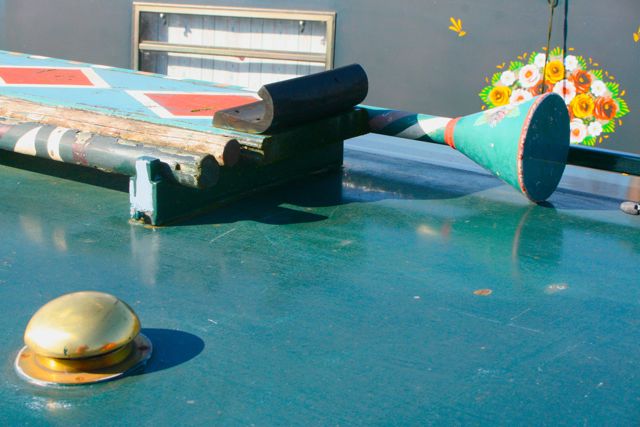
We spent five glorious days afloat in weather that was as sunny and as warm as any we have had this year. Starting on Wednesday from Stretham to moor at Hemingford, on Thursday to Godmanchester, and on to Great Barford in the evening, we debated going on to Bedford but left that for another day.
Complicated personal arrangements meant that folks were getting on and off Patience at various points, but Duncan saw it through - 84 miles, 24 locks and five days.
We had three problems, which will be described in more detail in a later post, but this was a great trip exploring the further western regions of the Ouse. The water level was generally low but the water clear and sparkling, with trees dipping into the edges, abundant wildlife (heron, kingfisher, and swans, geese and ducks all with young chicks) and a classic view of a basking seal at Earith.
We noted that the moorings at Hemingford appear to be very grand but are in fact hard concrete and so high that there is an ever present risk of either scraping poor Patience's sides or even getting her gunwhales trapped under the ledge with water rising. On the other hand the rough moorings a hundred yards further up are fine and a visit to the excellent Cock for a good pint and a splendid meal compensate for any inconvenience.

Don't miss the lovely garden in Lucy Boston's house which you can see by peeking over the wall by the moorings.
On Thursday to Godmanchester where we can borrow a private mooring and we filled up with water and newspapers. On to St Neots whose Paper Mill lock is long and deep and can be disconcertingly vigorous with surges of water. Passing the delights of St Neots and the golf course of Wyboston and on through Roxton Lock we smiled smugly at the poor motorists above us in queues on the A1 and the A14. Moored up at Great Barford bridge and ate at the busy and friendly Anchor right next to the bridge. It has been said that a long narrow boat might find it awkward manoeuvring through some of the arches as the river bends immediately south of the bridge but we think you should easily make it so long as you bear left directly after passing through the arch.
The return journey varied with the available crew. We spent longer at St Neots this time and moored for the night at The Offords where the GOBA mooring (a bit cramped though perfectly adequate with a gangplank), opposite the chic popularity of the Buckden Marina with its pool and gym - and whose well constructed moorings are charged at £5 per night (and which were mainly empty...).
The final night we moored at St Ives, close by the Norris Museum of local history. It seems to be a honey pot for young people on a Saturday night out. The Golden Lion, where we ate at 8pm, was taken over by young ravers at 8.30 so we made our excuses and left. We counted 12 take-away shops, four pubs with live music and - too late - two small friendly restaurants close to the old bridge.
There was a lot more weed in the river than there had been a few days before - but The Tale of Three Problems must wait, tantalisingly, till my next blog post ....
Complicated personal arrangements meant that folks were getting on and off Patience at various points, but Duncan saw it through - 84 miles, 24 locks and five days.
 |
| The Old West River |
We had three problems, which will be described in more detail in a later post, but this was a great trip exploring the further western regions of the Ouse. The water level was generally low but the water clear and sparkling, with trees dipping into the edges, abundant wildlife (heron, kingfisher, and swans, geese and ducks all with young chicks) and a classic view of a basking seal at Earith.
 |
| Cygnets on The Ouse |
We noted that the moorings at Hemingford appear to be very grand but are in fact hard concrete and so high that there is an ever present risk of either scraping poor Patience's sides or even getting her gunwhales trapped under the ledge with water rising. On the other hand the rough moorings a hundred yards further up are fine and a visit to the excellent Cock for a good pint and a splendid meal compensate for any inconvenience.

Don't miss the lovely garden in Lucy Boston's house which you can see by peeking over the wall by the moorings.
On Thursday to Godmanchester where we can borrow a private mooring and we filled up with water and newspapers. On to St Neots whose Paper Mill lock is long and deep and can be disconcertingly vigorous with surges of water. Passing the delights of St Neots and the golf course of Wyboston and on through Roxton Lock we smiled smugly at the poor motorists above us in queues on the A1 and the A14. Moored up at Great Barford bridge and ate at the busy and friendly Anchor right next to the bridge. It has been said that a long narrow boat might find it awkward manoeuvring through some of the arches as the river bends immediately south of the bridge but we think you should easily make it so long as you bear left directly after passing through the arch.
The return journey varied with the available crew. We spent longer at St Neots this time and moored for the night at The Offords where the GOBA mooring (a bit cramped though perfectly adequate with a gangplank), opposite the chic popularity of the Buckden Marina with its pool and gym - and whose well constructed moorings are charged at £5 per night (and which were mainly empty...).
 |
| The Old Bridge at St Ives |
The final night we moored at St Ives, close by the Norris Museum of local history. It seems to be a honey pot for young people on a Saturday night out. The Golden Lion, where we ate at 8pm, was taken over by young ravers at 8.30 so we made our excuses and left. We counted 12 take-away shops, four pubs with live music and - too late - two small friendly restaurants close to the old bridge.
There was a lot more weed in the river than there had been a few days before - but The Tale of Three Problems must wait, tantalisingly, till my next blog post ....